What Is Vibe Coding? The Honest Explanation for People Who Never Learned to Code
In February 2025, Andrej Karpathy sent a tweet that got 4.5 million views. Karpathy is a former OpenAI founding member and ex-Tesla AI director. The tweet was about a new way of building software he called vibe coding.
He later said it was a throwaway shower thought. Collins Dictionary named it Word of the Year anyway.
If you keep hearing the phrase and still do not know what it actually means, this post is the plain-English breakdown. No tech background required.
What Is Vibe Coding?
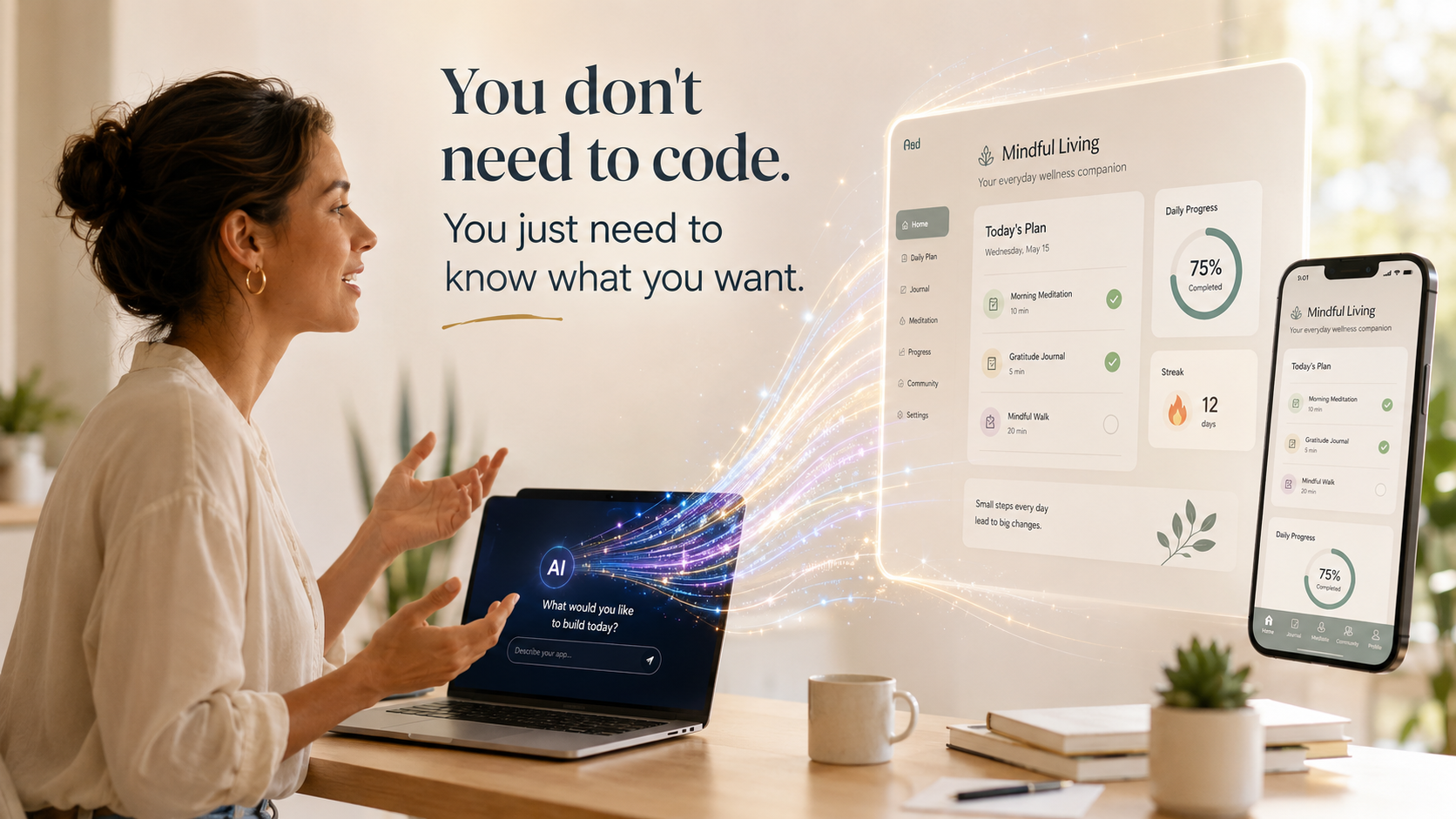
Vibe coding is building software by describing what you want in plain language, and letting an AI write all the code for you.
You talk to the AI like you would talk to a developer. You say what you want: “Build me a form that collects email addresses and saves them to a spreadsheet.” The AI writes the code. You test it. If something breaks, you tell the AI what broke and it fixes it. You keep going until it works.
Karpathy described his own process this way: “I just see stuff, say stuff, run stuff, and copy paste stuff, and it mostly works.” He used voice input so he barely touched the keyboard.
The shift matters. Traditional coding requires years of learning syntax, understanding how computers process data, and building technical foundations before you can ship anything real. Vibe coding removes that requirement entirely. Your job is to know what you want to build and communicate it clearly. The AI handles the code.
Why Did It Go Viral So Fast?
Developers had already been using AI to write code faster before Karpathy’s tweet. What the tweet did was name it, and more importantly, describe a version where technical knowledge was optional.
That opened the door for a completely different type of person.
As of 2026, 63% of people doing vibe coding have no traditional development background. Adoption among non-technical users surged 520% year over year. Marketers, entrepreneurs, small business owners, and people who had never written a line of code started building real, working applications.
The vibe coding market is now worth $4.7 billion globally, projected to reach $12.3 billion by 2027. That is not a trend. It is a structural shift in who gets to build things.
What Are People Actually Building?
Not everyone is building the next Instagram. That is not the point.
Here is what non-technical people are actually shipping with vibe coding right now:
- Booking and scheduling tools: custom appointment systems for small businesses, built over a weekend
- Lead generation forms and landing pages: connected to email lists, no developer required
- Internal dashboards: tools that pull data from different sources and display it in one place
- Calculators and quizzes: interactive tools that drive organic traffic and convert visitors
- SaaS micro-products: simple paid tools solving one specific problem, launched by non-technical founders
- Custom automations: workflows that connect apps and run without manual input
Lovable, one of the leading vibe coding platforms, reports over 100,000 new projects created on the platform every single day. iOS app releases are up 60% year over year. A meaningful chunk of those are coming from people who could not have shipped anything two years ago.
The Tools You Need to Start
There are two categories of vibe coding tools. Knowing which one fits your situation saves a lot of frustration.
If you have zero coding experience
Start here. These platforms generate full applications from your description and handle hosting for you. No setup required.
- Lovable: the most beginner-friendly option for building complete web apps. Describe what you want, it builds it, you publish directly from the platform.
- Bolt: fast and reliable for full-stack apps. Strong choice if you want something production-ready quickly.
- Replit: runs entirely in your browser, no installation needed. Good if you want to learn a bit as you build rather than staying fully hands-off.
- v0 by Vercel: excellent for building UI components and front-end designs. If the visual side matters most, this is worth trying.
If you have some technical background
Cursor and Claude Code give you more control and work inside development environments. These are tools for people who understand code but want to write less of it.
For most people reading this: start with Lovable or Bolt. Both have free tiers. You can build and test something real before spending a single dollar.
What Vibe Coding Is NOT
This section matters because most of the hype leaves it out.
Vibe coding does not mean you can build anything without thinking. The AI writes the code. You are still responsible for what gets built.
- You still need to test your product. AI-generated code has bugs. Some studies put the rate of exploitable bugs at 40% or higher. If you are building something people will actually use, you have to check that it works.
- Security is your problem too. A vibe-coded social network launched in early 2026 was breached within three days. The founder publicly said he had not written a single line of code. 1.5 million authentication tokens and 35,000 email addresses were exposed. The AI did not warn him about the vulnerabilities because he did not know to ask.
- Complexity scales with responsibility. Simple tools? You can build them with no background. Applications that handle payments, user data, or sensitive information? You either need to understand security basics or hire someone who does.
This is not a reason to avoid vibe coding. It is a reason to go in with realistic expectations. For simple tools and prototypes, it is genuinely powerful. For anything touching real user data, do your homework before you ship.
Why This Matters If You Are Building Income Online
For years, “building a digital product” meant either learning to code (a multi-year investment) or hiring a developer (a multi-thousand dollar investment before you even know if your idea works). Vibe coding removes both barriers for a specific category of product.
Simple paid tools, calculators, generators, and small SaaS utilities are now buildable by people with no technical background. If you can identify a problem, describe a solution clearly, and iterate until it works, you can ship something.
Non-technical founders are building micro-SaaS products generating real monthly revenue in 2026. Not all of them. Not easily. But the path is shorter than it has ever been.
The opportunity right now is not just in building products. It is in understanding this shift early enough to move before most people around you have figured it out.
How to Start Today (The Shortest Path to a Real Result)
- Pick one small problem. Not an app. Not a startup. One specific, small thing: a form, a calculator, a scheduling page. Something you can describe in two sentences.
- Go to Lovable or Bolt. Create a free account.
- Describe what you want clearly. The more specific you are, the better the output. Include who it is for, what it should do, and what it should look like.
- Test what it builds. Click through it. Break it. Tell the AI what is wrong. Repeat.
- Ship it when it works, not when it is perfect. When it does the thing it is supposed to do, that is enough to start.
The first thing you build will not be great. That is true of the first blog post, the first product, and the first anything. The point is to understand what this actually is before the people around you figure it out.
Frequently Asked Questions About Vibe Coding
Do you need to know how to code to vibe code?
No. You describe what you want in plain language and the AI writes the code. Most people currently using vibe coding platforms have no coding background. Some technical understanding around security and testing becomes more important as projects get more complex, but you can build simple tools with zero prior experience.
Is vibe coding real or just hype?
It is real. The market is worth $4.7 billion as of 2026. Lovable reports 100,000 new projects created daily. iOS app submissions are up 60% year over year. The tools are not perfect, but they are functional enough to build real, working products right now.
What can you build with vibe coding?
Simple web apps, landing pages, lead generation tools, internal dashboards, calculators, quizzes, scheduling tools, and micro-SaaS products. The simpler and more specific your idea, the easier it is to execute without technical knowledge.
What is the best vibe coding tool for beginners?
Lovable and Bolt are the two most recommended starting points for people with no coding background. Both have free tiers and generate full applications from natural language descriptions with no setup or installations required.
Can you make money with vibe coding?
Yes, and people are. Non-technical founders are building and selling small SaaS tools, creating interactive content that drives ad revenue, and offering vibe coding services to businesses that need simple internal tools. It requires a working idea, persistence with iteration, and realistic expectations about complexity. It is not passive income by default, but it has lowered the technical barrier to shipping a digital product more than anything else in the last decade.