The Open-Source AI Revolution: Democratizing Innovation and Shifting Power
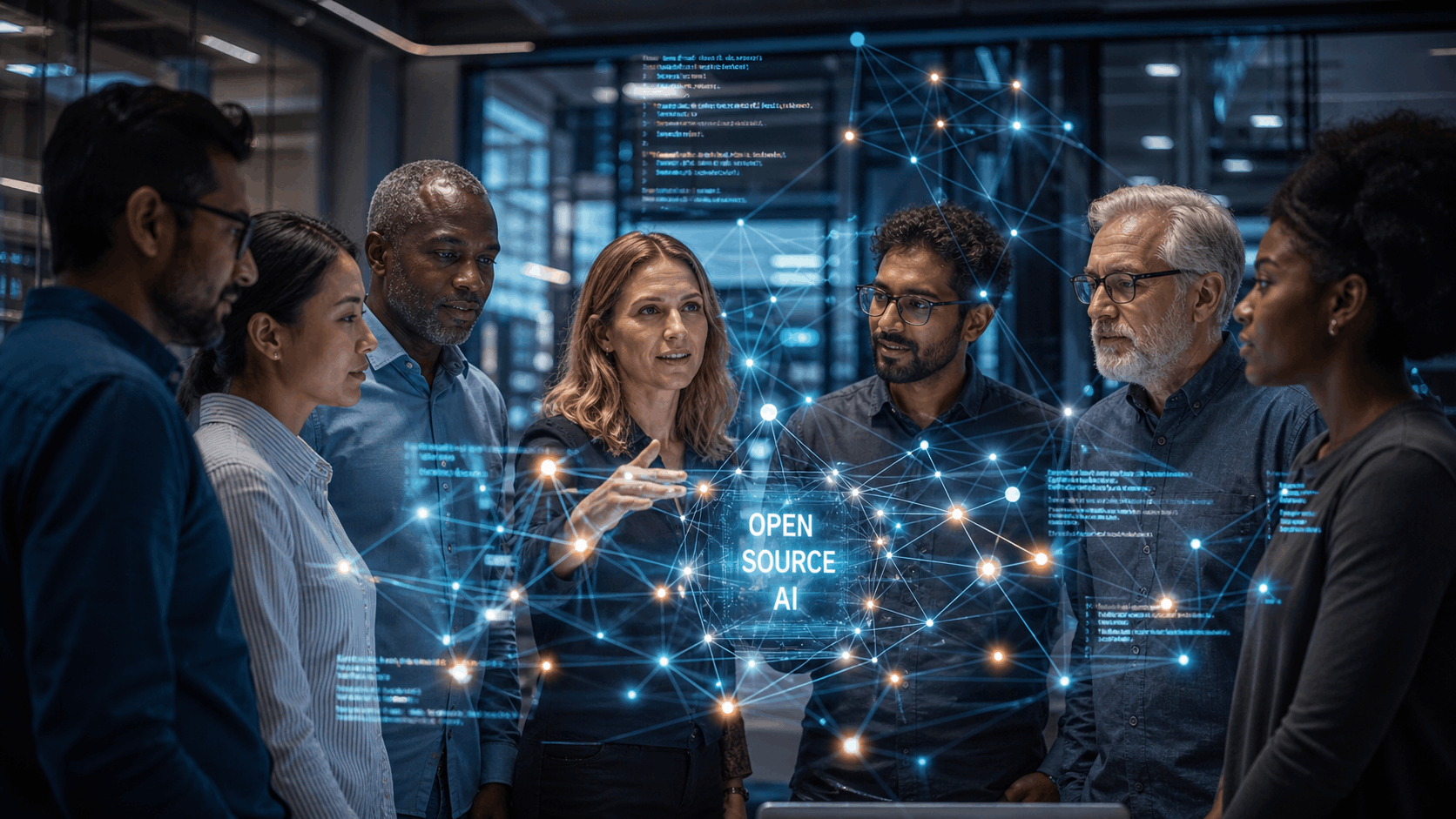
The Genesis of an Accessible Future: How Open-Source is Redefining AI
For years, the cutting edge of Artificial Intelligence felt like a heavily guarded fortress, accessible only to a handful of tech giants with colossal budgets and proprietary datasets. The narrative was one of closed-door labs, exclusive research, and tightly controlled APIs.
However, as we navigate May 2026, a seismic shift has redefined this landscape. The era of the Open-Source AI Revolution is upon us, democratizing innovation and fundamentally altering the power dynamics of the industry. This isn’t merely a technological evolution; it’s a strategic re-alignment, inviting a new wave of creators, businesses, and researchers to participate in shaping the AI future.
The movement toward open-source AI signifies a profound departure from the once-dominant paradigm. It is driven by the understanding that collective intelligence, transparent development, and shared resources lead to more robust, ethical, and universally beneficial AI systems. The notion of a few entities dictating the pace and direction of AI development is slowly eroding, replaced by a distributed, collaborative ecosystem. This shift empowers smaller businesses, academic institutions, and independent developers to build, customize, and deploy sophisticated AI solutions without the prohibitive costs or restrictive licenses previously associated with frontier models.
Beyond the Walled Gardens: Why Open-Source AI Matters for Business
The business implications of AI democratization are nothing short of transformative. For years, companies faced a stark choice: invest millions in building bespoke AI capabilities or pay hefty fees to access the limited functionalities offered by proprietary models. Open-source AI shatters this dichotomy.
Unlocking Unprecedented Customization and Flexibility
One of the most compelling advantages of open-source AI models lies in their unparalleled customization capabilities. Unlike black-box proprietary systems, open-source models can be fine-tuned, adapted, and integrated directly into specific business workflows. This means:
Tailored Solutions
Businesses are no longer forced to adapt their unique problems to generic AI solutions. Instead, they can mold open-source models to fit their exact data, industry nuances, and operational requirements. This is particularly crucial for niche markets or highly specialized industries where off-the-shelf solutions often fall short.
Enhanced Control
Companies gain full control over their AI infrastructure, reducing vendor lock-in and allowing for greater agility in response to evolving market demands or regulatory changes. This level of control is invaluable for maintaining competitive advantage and intellectual property.
Cost Efficiency
While not entirely free (compute resources and expertise are still required), the absence of hefty licensing fees significantly reduces the barrier to entry for advanced AI. This allows budget-conscious SMEs to experiment with and deploy powerful AI solutions that were previously out of reach, leading to a surge in AI innovation at all levels.Fostering Transparency and Trust
The transparency inherent in open-source development directly addresses growing concerns around AI ethics, bias, and accountability. When the underlying code of an AI model is publicly available, it can be scrutinized, audited, and improved by a global community. This leads to:
Reduced Bias
A diverse group of developers can identify and mitigate algorithmic biases, leading to fairer and more equitable AI systems. This is a critical factor for businesses operating in regulated industries or those committed to ethical AI deployment.
Enhanced Security
Open-source models benefit from the collective wisdom of thousands of eyes, making them potentially more secure as vulnerabilities are often identified and patched more rapidly than in closed systems.
Greater Trust
Consumers and stakeholders are increasingly wary of opaque AI. Open-source models, with their verifiable nature, can build greater trust and acceptance for AI-powered products and services.

The Shifting Sands of Power: How Innovation is Decentralizing
The impact of open-source AI extends beyond individual business benefits; it is actively shifting power dynamics within the global tech landscape. Historically, the “frontier” of AI was exclusively the domain of a few well-funded American corporations. That era is definitively over.
The Rise of a Distributed Ecosystem
Innovation is no longer solely originating from Silicon Valley. The democratization of powerful AI tools has enabled a distributed ecosystem where breakthroughs can emerge from anywhere. This has significant implications for:
Global Collaboration: Researchers and developers from diverse geographical locations are contributing to and building upon open-source foundations, leading to a richer tapestry of ideas and solutions.
Accelerated Development: The iterative nature of open-source projects means that improvements and new functionalities can be developed and deployed at an accelerated pace, far outstripping the often slower, internal cycles of proprietary systems.
Reduced Monopoly Power: The availability of high-quality, open-source alternatives forces proprietary model developers to continuously innovate and provide superior value, preventing market monopolies and fostering a healthier competitive environment.
Chinese Labs Emerge as Frontier Contenders
A particularly striking development in this shifting landscape is the significant contribution from Chinese labs. For years, the focus was on China’s application of AI, but now, several Chinese research institutions and companies have released open-weights coding models that are rapidly approaching, and in some specialized areas, even matching the capabilities of Western frontier models.
Bridging the Gap
These Chinese open-source models demonstrate that cutting-edge AI research is no longer exclusive to a single region. They are contributing robust, high-performance alternatives, often developed with unique architectural insights.
Lower Inference Costs
A crucial advantage of these emerging models is their potential for lower inference costs. This directly translates to more affordable deployment for businesses globally, further fueling the democratization of AI and accelerating its adoption, particularly in emerging markets.
Diverse Perspectives
The contributions from Chinese labs also bring diverse research perspectives and problem-solving approaches, enriching the global open-source AI community and leading to more universally applicable AI solutions. This cultural and intellectual cross-pollination is vital for the long-term health and growth of AI.
Practical Applications for the Empowered Enterprise
For businesses, the open-source AI revolution presents a golden opportunity to build competitive advantage. Here are key areas where customizable AI solutions powered by open-source models are making an impact:
Enhanced Data Analytics
Fine-tune open-source LLMs to analyze proprietary datasets, extract critical insights, and identify market trends with unprecedented accuracy.
Automated Customer Service
Deploy highly specialized chatbots and virtual assistants that understand context and provide personalized support, reducing operational costs and improving customer satisfaction.
Personalized Marketing & Sales
Leverage open-source models to generate highly personalized marketing content, predict customer behavior, and optimize sales funnels.
Streamlined Operations
Automate complex internal workflows, from document processing and legal review to supply chain optimization and inventory management.
Research & Development Acceleration
Utilize AI to sift through vast amounts of scientific literature, generate hypotheses, and even assist in experimental design.

Navigating the Open-Source Landscape: Challenges and Considerations
While the benefits are clear, adopting open-source AI is not without its considerations:
• Expertise Requirement: Deploying and customizing open-source models still requires technical expertise. Businesses may need to invest in training their teams or partnering with AI solution providers.
• Maintenance & Updates: While community-driven, maintaining and updating open-source models requires vigilance. Ensuring compatibility and security patches is crucial.
• Licensing: Different open-source licenses have varying terms. Businesses must understand these to ensure compliance.
• Resource Allocation: While initial costs are lower, compute resources, data storage, and the expertise to manage them still represent an investment.
The key is to approach open-source AI with a strategic mindset, understanding both its immense potential and the practicalities of implementation.
The Future is Collaborative: Embracing the Open-Source AI Paradigm
The Open-Source AI Revolution is more than a trend; it’s a fundamental shift in how artificial intelligence is developed, deployed, and democratized. It empowers a broader spectrum of innovators, from independent developers to multinational corporations, to build sophisticated, customizable AI solutions. The rise of open-source contributions from diverse regions, including a strong showing from Chinese labs, signals a truly global and collaborative future for AI innovation.
Businesses that embrace this paradigm, investing in the expertise to leverage and contribute to open-source models, will be best positioned to thrive in an increasingly AI-driven world. The power is shifting, and the gates of the AI fortress are open. This is the moment to seize the opportunity, to build, adapt, and innovate, not just consume. The future of AI is open, and it is collaborative.
The Codebreaker
One thing. Every Sunday. Free.
We decode one idea worth your time — an AI tool, a city, a relationship pattern, or a manhwa worth losing sleep over. Under 600 words. Always useful. Never filler.
Unsubscribe anytime. We don't beg.