
How I Work Remotely From Chiang Mai on Under $1200 a Month

Every time I tell someone I live in Chiang Mai on under $1,200 a month, they assume I’m camping or surviving on instant noodles. I am not.
I have a studio apartment in the Nimman area with a balcony. I eat well. I go out. I work from a proper coworking space three days a week and from my apartment the other two. I have a scooter. I have a life.
The number is not a sacrifice number. It is an intentional number.
Here is exactly how it breaks down.
The Honest Monthly Breakdown
Rent: $380
A furnished studio in Nimman or near the Old City runs between $300 and $500 per month depending on how new the building is and how much natural light you want. I landed at $380 for a fully furnished place with air conditioning, fast WiFi included, and a gym in the building. In most Western cities this same $380 would not even cover utilities.
Food: $220
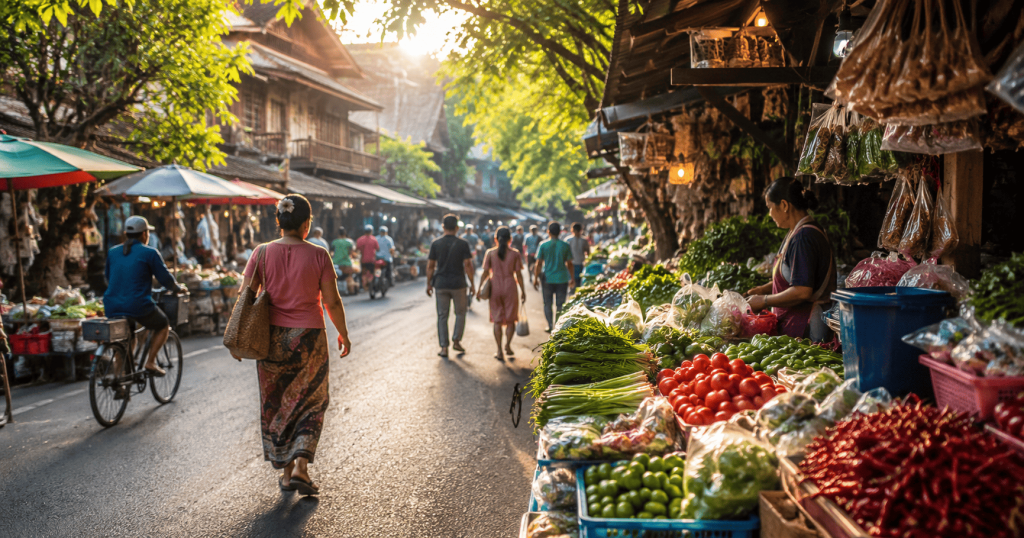
This is where Chiang Mai actually spoils you. Street food meals run between $1 and $2. A proper sit-down meal at a local restaurant is $3 to $6. If you want Western food or a coffee shop work session with a nice latte, budget $6 to $12 per outing. I eat street food most mornings and lunches, cook simple dinners twice a week, and treat myself to a proper restaurant meal on weekends without guilt. $220 covers all of it with room to breathe.
Coworking: $75
Monthly memberships at popular coworking spaces like MANA, Yellow, CAMP or 4seas (the legendary 24-hour coffee-shop-coworking hybrid that basically built Chiang Mai’s nomad reputation) run $60 to $100 a month. I use a mid-tier membership three days a week. The WiFi is reliable, the community is good, and getting out of your apartment is worth every baht.
Transport: $85
A scooter rental runs $60 to $80 per month. Add gas and you are at roughly $85. I use Grab for late nights or rainy days. If you prefer not to ride, Grab alone can cover most of your movement for around the same monthly cost depending on how far you travel.
Utilities and SIM: $55
Electric is the variable one. Air conditioning in the Thai heat will push it up, especially between March and May. Budget $30 to $50 for electric and water combined. A local SIM with unlimited data from AIS or DTAC costs $10 to $15 per month and is genuinely fast. Fiber internet is available in most modern apartments and often included in rent.
Lifestyle and Social: $130
This covers everything else. Night markets. A temple tour on a slow Sunday. Yoga classes, which are plentiful and affordable here. A cocktail at a rooftop bar with friends you met at coworking. Chiang Mai is not a party city the way Bangkok or Koh Phangan is, which actually makes it easier to stay on budget. Evenings here tend to be low-key and cheap and genuinely good.
What Stays: $255
This is what is left over at the end of the month. I keep it as a buffer and top up my emergency fund. Every month. Without tracking every baht.
| Expense | Monthly Cost |
|---|---|
| Rent (Nimman studio) | $380 |
| Food | $220 |
| Coworking | $75 |
| Transport | $85 |
| Utilities and SIM | $55 |
| Lifestyle and social | $130 |
| Buffer / savings | $255 |
| Total | $1,200 |
Why Chiang Mai Specifically
There are cheaper cities in Southeast Asia. There are also more chaotic, hotter, and less remote-work-friendly ones. Chiang Mai sits in a specific sweet spot.
The internet infrastructure is solid. Fiber is available in most modern apartments. The digital nomad community has been here for over a decade, which means coworking spaces, networking events, and a ready-made social life exist without effort. The Old City is walkable and genuinely beautiful. The surrounding mountains give you somewhere to go when you need to reset. The food is some of the best in Thailand, and Thai food is some of the best in the world.
It also rewards slowing down. The pace here is deliberate. That is not accidental, and for women building businesses that require sustained creative output, it matters more than any co-working space amenity.
Visa Reality Check
Thailand launched its Digital Nomad Visa (DTV) in 2024, which allows remote workers to stay for up to 180 days per entry, renewable for another 180 days. It requires proof of remote income and a processing fee. Many nomads also use the tourist visa on arrival or the Single Entry Tourist Visa depending on their nationality and income situation. Do your research specific to your passport before you book anything.
What Nobody Tells You
The adjustment period is real. The heat is real. The loneliness of arriving somewhere new without a network is real. Chiang Mai has a long-stay nomad community but you have to show up to access it. It does not come to you.
Also: the slower pace can either heal you or make you restless, depending on what you came here to escape from. Know the difference before you book a one-way ticket. This city will hold a mirror up to exactly why you came, and that is not always comfortable.
Is It For You
If you do remote work and your income is $1,500 or more per month, Chiang Mai will not just cover your costs. It will give you margin — the kind that lets you save aggressively, invest intentionally, or simply stop running the numbers in your head every time you want to eat somewhere nice.
It is not a perfect city. But for a certain kind of woman building a certain kind of life, it might be one of the most strategic decisions she makes.